
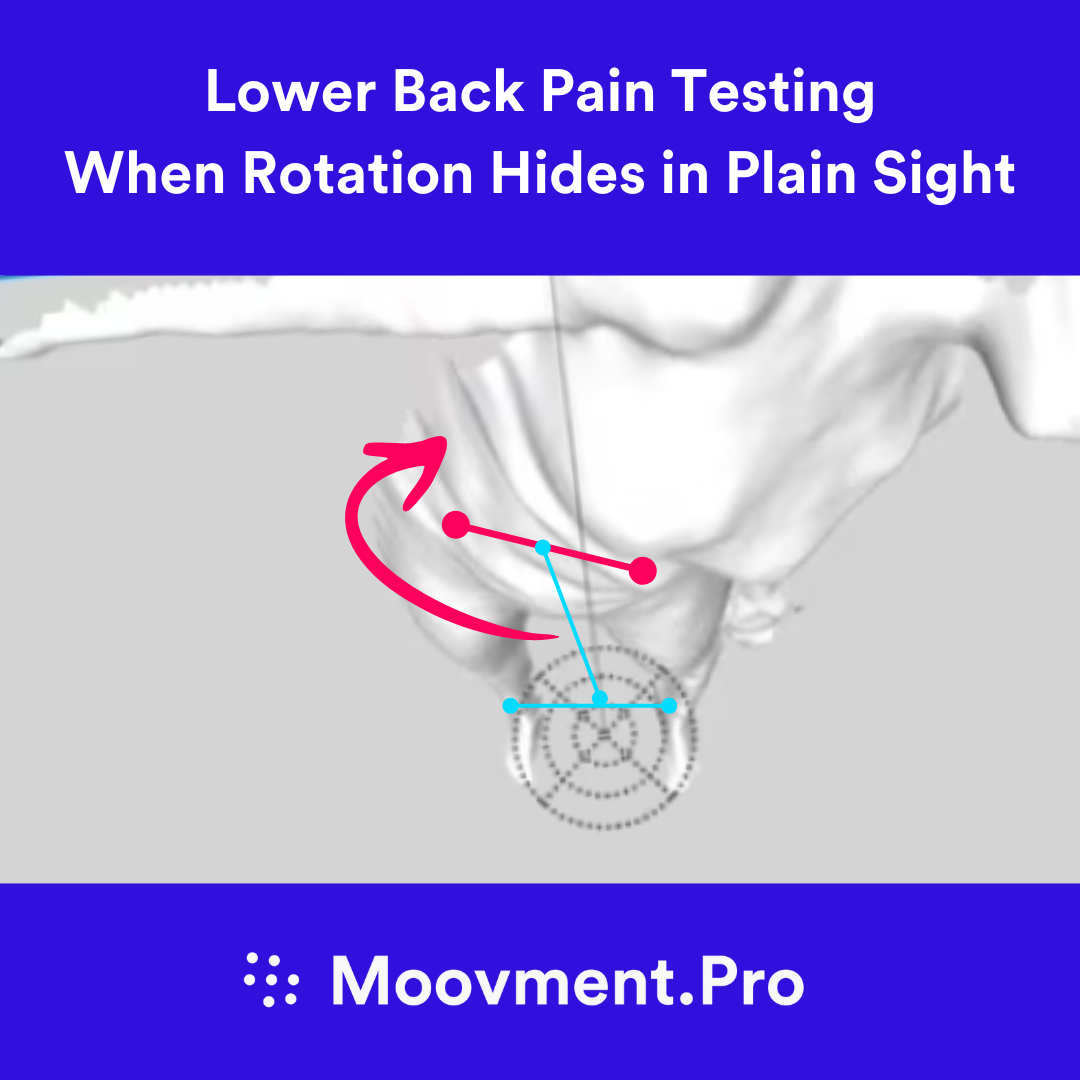
When Rotation Hides in Plain Sight: Why Overhead (Transverse-Plane) Views Matter for Low Back Pain
If you only ever look at posture and movement from the frontal plane, you will routinely miss the very thing that often aggravates the lumbar spine: rotation of the trunk and lumbopelvic girdle in the transverse (horizontal) plane. That blind spot has clinical consequences. A growing body of evidence shows people with low back pain (LBP) commonly display altered lumbopelvic coordination and rotation-related impairments - patterns you simply cannot trust a straight-on camera angle to reveal.
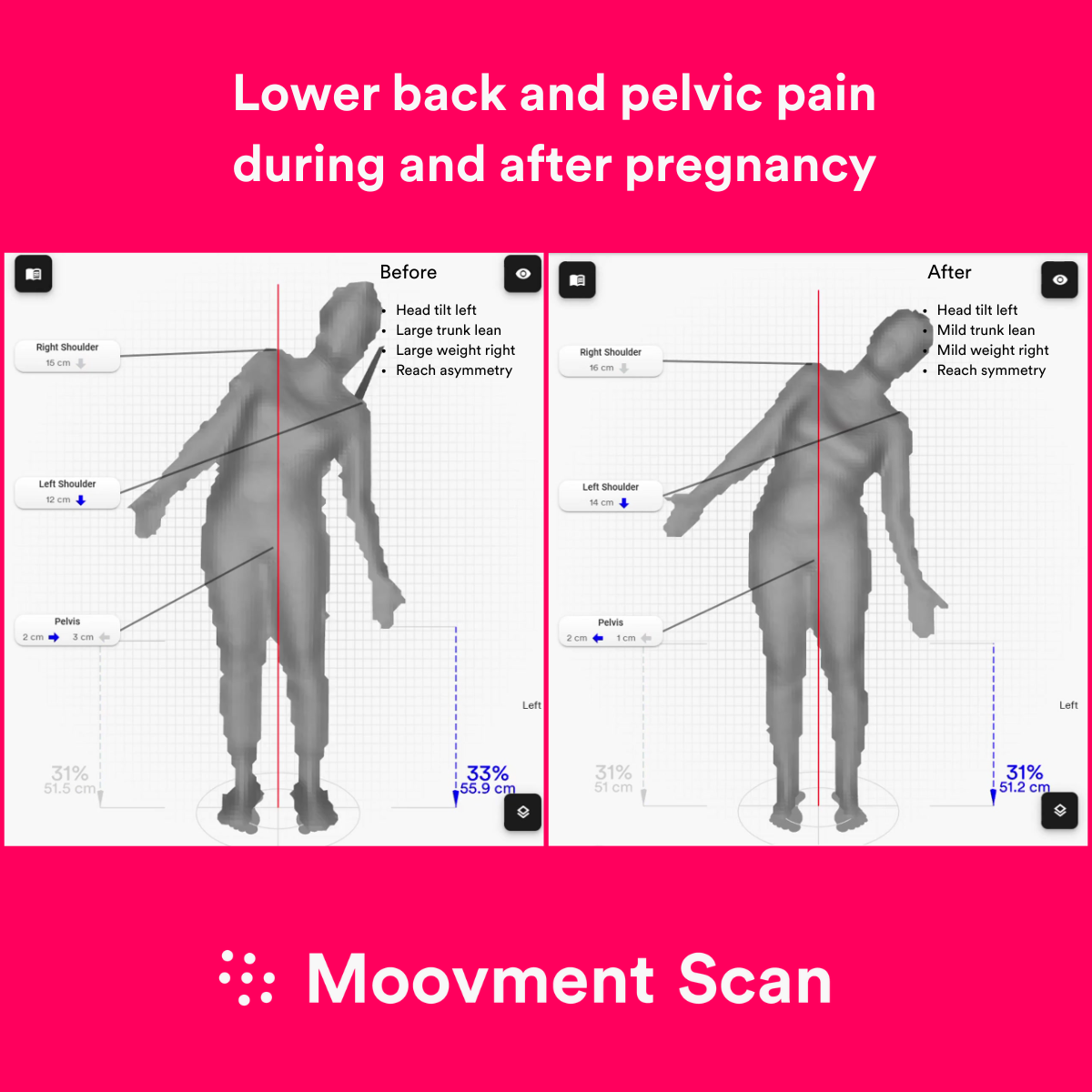
Lower Back Hurt During Pregnancy - and Why It Sometimes Goes Away After?
Lower back pain and pelvic girdle pain are almost a rite of passage for many pregnant women -but the numbers might surprise you. Research shows 50–80% of women experience back pain during pregnancy, and pelvic girdle pain (PGP) affects more than half of expectant mothers, with 5–8% reporting severe pain and disability. The pain often peaks in the third trimester, thanks to hormonal changes (thankyou, Relaxin!), weight gain, and shifting posture (1).

Posture and movement in women after childbirth
The extent to which womens’ postures and movement patterns change after childbirth is somewhat ignored, possibly due to the fact that we do not measure the alignment and movement health of mothers until there are symptoms, if at all!
The changes are not necessarily due to pregnancy and childbirth but also the lifting and carrying that are necessary after childbirth. A proactive approach that routinely measures and prescribes personalised corrective exercise is needed - for everyone!
It is much easier to train a pain-free body, and to maintain an active lifestyle, both of which are positive for the physical and mental health of our beloved mothers.

Can it be true that up to 70% of physical therapy clients don’t do their exercises? Apparently, they don’t feel in control!
Up to 70% of people don’t do their physical therapy exercises. They don’t feel involved, and feel a lack of control or what is called self-efficacy.