Aging is inevitable, but how we age—and how well we move—depends on factors we can influence. After 40, both men and women experience significant hormonal changes that affect muscle strength, bone density, posture, and movement quality. These changes increase the risk of injuries and aggravate old ones. Proactive assessment of balance, posture, and movement patterns can help prevent these issues and maintain long-term health.
Hormonal Changes After 40: What Happens and Why It Matters
For Women: Menopause and Musculoskeletal Health
Estrogen Decline: During the menopausal transition (typically between ages 45 - 55), estrogen levels drop sharply. Estrogen plays a critical role in maintaining bone density, muscle mass, and tendon elasticity. Its decline accelerates bone loss - up to 10% of spine bone density within five years after menopause - and increases risk of osteoporosis and fractures.
Impact on Muscles and Joints: Lower estrogen reduces collagen turnover, making tendons stiffer and muscles weaker. This contributes to joint pain, stiffness, and higher injury risk during everyday activities and exercise.
For Men: Andropause and Gradual Testosterone Decline
Testosterone Decline: Men experience a gradual drop in testosterone starting around age 40, averaging 1% per year. By age 70, levels can be 30 - 50% lower than in youth.
Impact on Musculoskeletal Health: Testosterone supports muscle protein synthesis and bone density. Its decline leads to sarcopenia (loss of muscle mass), reduced strength, and increased risk of falls and fractures. Lower testosterone is also linked to joint pain and slower recovery from injuries.
Why These Changes Affect Movement and Injury Risk
Sarcopenia: Both sexes lose muscle mass and strength with age, accelerating after 40. Sarcopenia is associated with frailty, falls, and mobility limitations.
Postural Changes: Reduced muscle strength and joint flexibility alter posture and gait. Studies show decreased range of motion in hips, knees, and ankles significantly slows gait speed and increases fall risk in older adults.
Movement Quality: Poor movement patterns combined with hormonal changes amplify stress on joints and ligaments, raising injury risk. Research using movement screening suggests that low-quality movement increases injury risk up to sevenfold.
The Case for Movement Assessments
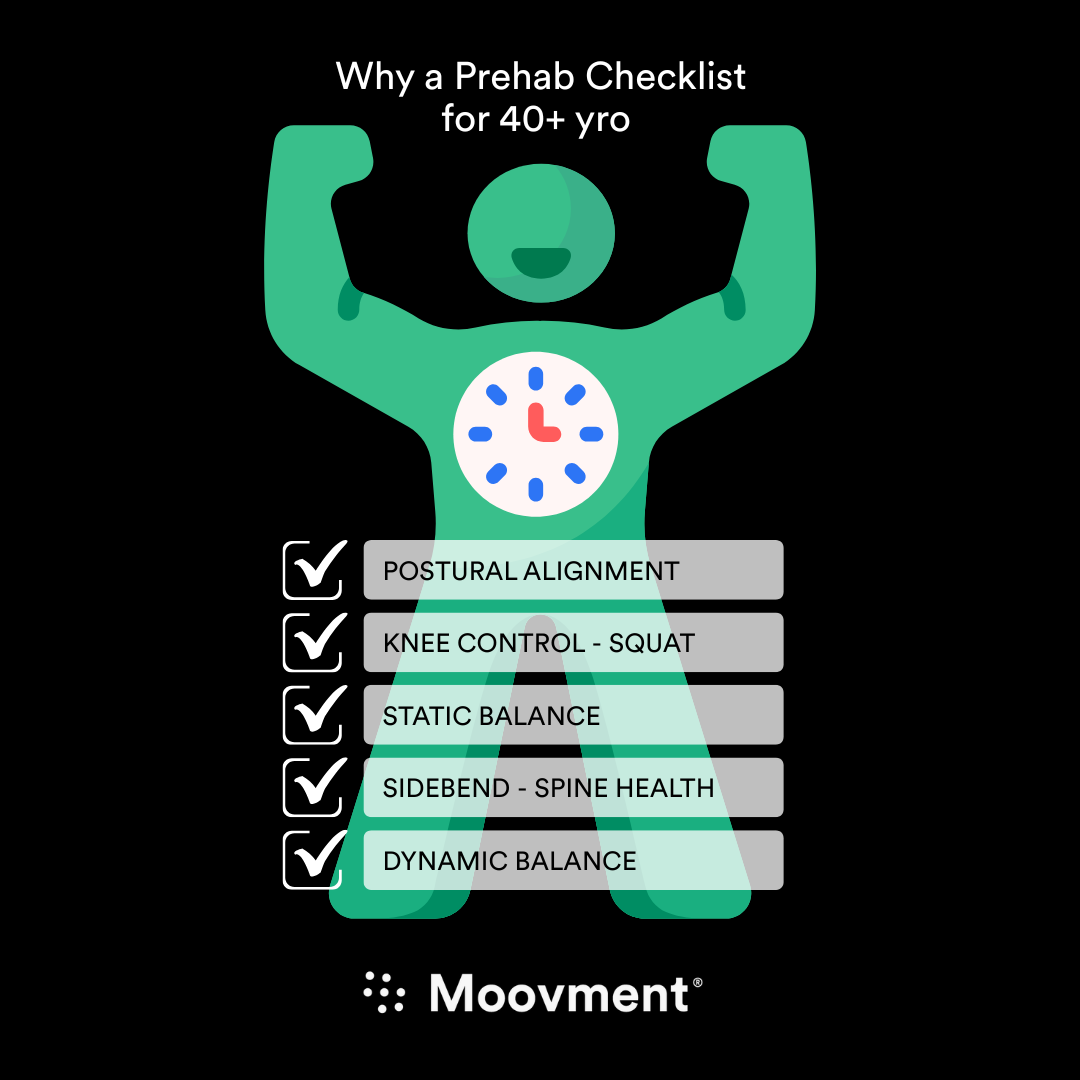
A comprehensive assessment of balance, posture, and movement patterns can:
Detect early signs of instability and asymmetry.
Identify compensations that overload joints.
Guide corrective exercises to restore optimal function.
Prevention Beats Recovery
Rehabilitation after injury is costly and time-consuming. Prevention is simple and effective. Evidence shows that strength training, mobility work, and balance exercises can reverse many age-related declines - even in adults over 70.
Bottom Line
If you’re over 40 - man or woman - don’t wait for pain or injury to tell you something’s wrong. Hormonal changes are inevitable, but their impact on movement and health can be managed. Get your balance, posture, and movement checked today to stay strong, mobile, and injury-free for years to come.
References
Alshehri S, Lega IC. The Impact of Menopause on the Musculoskeletal System. Canadian Women’s Health Today, 2024. https://canadianwomenshealthtoday.com/article/view/2-1-Alshehri_et_al
Mayo Clinic. Male Menopause: Myth or Reality? 2025. https://www.mayoclinic.org/healthy-lifestyle/mens-health/in-depth/male-menopause/art-20048056
Ji S, Jung HW, et al. Sarcopenia as the Mobility Phenotype of Aging: Clinical Implications. J Bone Metab, 2024. https://e-jbm.org/upload/pdf/jbm-2024-31-1-1.pdf
Zhai M, Huang Y, et al. Effects of Age-Related Changes in Trunk and Lower Limb Range of Motion on Gait. BMC Musculoskeletal Disorders, 2023. https://link.springer.com/article/10.1186/s12891-023-06301-4
Walsh V. Link Between Hormones and Men’s Health Over 40. Iaas Med, 2025. https://www.iaas-med.com/hormones-and-mens-health-over-40/ and links in the article
Luks HJ. The Musculoskeletal Impact of Menopause. 2025. https://www.howardluksmd.com/the-musculoskeletal-impact-of-menopause/ with suggestions for treatment
Cabrolier-Molina J, et al. Effects of Exercise Intervention in Older Adults With and Without Sarcopenia: A Systematic Review. Sports, 2025. https://www.mdpi.com/2075-4663/13/5/152
🚀 Getting Started
Find a health and fitness provider that has the 3D Moovment Scan in the USA, Europe, and Australia. The scan takes just 6 minutes, but the wealth of information in the right hands can be a real game changer. Visit www.moovment.pro for more information.
You can even scan yourself from home using your mobile phone and registration link from Moovment Coach International.
Implementing Moovment software is simple for personal trainers and gyms, sports teams and coaches, and clinics and health professionals. All they need is a 3D camera and a PC, and they are ready to scan, assess, and impress.
For more information:
Visit www.moovment.pro to learn more or book a demo.
People who move well are able to move more and enjoy and long and pain-free life.