
Knowledge and skills you can use tomorrow.
Professional Courses, Certificates & Programs
Designed by practitioners to help you move forward with confidence, wherever you're headed next. Understand movement based on solid scientific principles, not fads or traditional thinking. Make your competence and your clients’ journeys visible.
Understand whole body movement
▪️
Make Confident Decisions
▪️
Make Your Client Journey Visable
▪️
Reveal what the eye cannot see
▪️
3D digital twin technology▪️
Understand whole body movement ▪️ Make Confident Decisions ▪️ Make Your Client Journey Visable ▪️ Reveal what the eye cannot see ▪️ 3D digital twin technology▪️
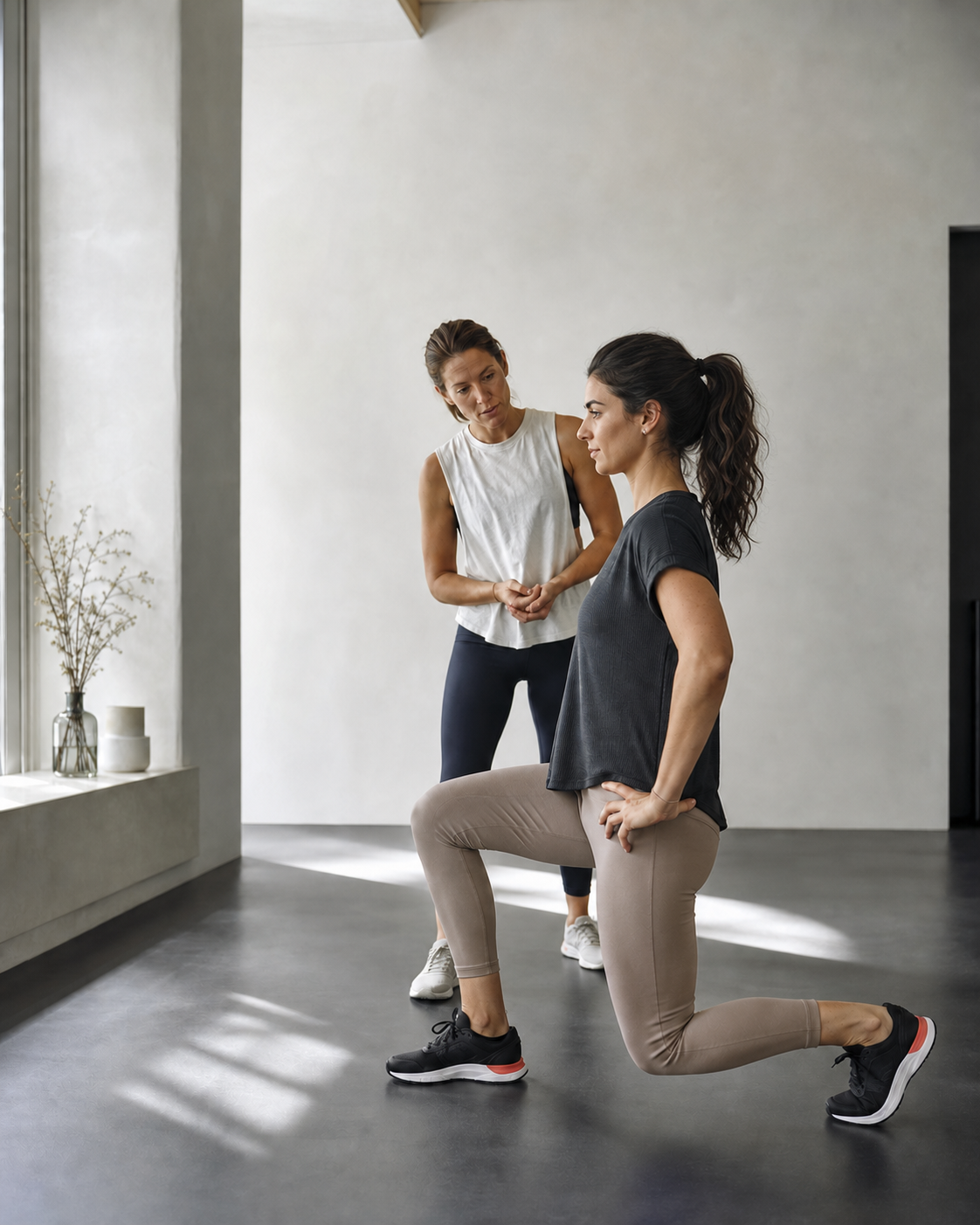
Stop Looking at Body Parts in Isolation
Learn How Movement Is Created, Transferred and Compensated Throughout the Body
Most practitioners can identify a movement problem.
Few can explain why it exists, where it originates, and how it influences the rest of the body.
In this four-week certification program you'll learn a practical whole-body assessment framework that helps you move beyond symptoms and identify the movement drivers that influence performance, exercise execution and long-term outcomes
Most movement assessments focus on individual joints, muscles or body regions.
But people don't move in parts.
They move as integrated systems.
A shoulder problem may be influenced by the trunk. A trunk problem may be influenced by the pelvis. A foot strategy may affect the entire body.
To truly understand movement, we must understand the key connections that allow forces to be created, transferred and controlled throughout the body.
Using practical observation methods, case discussions, and real-world examples, you'll develop a systematic approach to understanding movement dysfunction and selecting more effective exercise strategies.
Have You Ever Wondered...
• Why treating the painful area doesn't always solve the problem?
• Why two people with similar symptoms move completely differently?
• Why mobility interventions sometimes fail despite apparent restrictions?
• How a deficit in one body region can influence movement elsewhere?
• Whether you're focusing on the cause of dysfunction or simply reacting to symptoms?
• How to evaluate movement without relying exclusively on technology or measurements?
This course helps answer those questions.
Learn a Practical Visual Assessment Framework
Rather than assessing the body as a collection of isolated parts, you'll learn a systematic framework that evaluates key movement regions and the relationships between them.
The framework helps practitioners:
✓ Organise what they observe
✓ Reduce observational bias
✓ Improve assessment consistency
✓ Understand movement interactions
✓ Develop clearer exercise strategies
✓ Explain movement findings more effectively to clients
By the End of This Course You Will Be Able To:
✓ Understand how the shoulder complex, trunk and pelvis contribute to movement
✓ Recognise how movement is transferred between different regions of the body
✓ Assess key movement connections using a structured visual framework
✓ Identify regional deficits that may affect movement elsewhere
✓ Recognise common compensation strategies throughout the body
✓ Improve movement assessment consistency and clinical reasoning
✓ Better understand the relationship between function and exercise selection
✓ Select exercises that target the underlying drivers of movement dysfunction
✓ Develop a more comprehensive approach to analysing whole-body movement
✓ Explain movement problems with greater confidence
✓ Build more targeted exercise programs
✓ Improve client communication and education
✓ Reduce guesswork during assessments
✓ Identify movement drivers rather than symptoms
✓ Progress clients more effectively
✓ Support better long-term outcomes
Many practitioners focus on the area that presents the symptom.
This program helps you recognise the regional interactions that often influence those symptoms.
Once those relationships become visible, movement assessment becomes significantly easier to organise and explain.
What You'll Learn
Throughout four weeks of guided learning you'll explore:
✓ The major movement regions that influence whole-body function and their anatomy
✓ How force is created, transferred and controlled throughout the body
✓ The relationships between the shoulder complex, trunk and pelvis
✓ How regional deficits can influence exercise performance
✓ Common movement compensations and adaptation strategies
✓ A structured visual assessment framework
✓ Practical case studies from rehabilitation, fitness and performance settings
✓ Exercise strategies designed to influence movement connections
✓ Clinical reasoning approaches for movement analysis
Program Structure
Unlike a single workshop or webinar, this program allows you to progressively develop your assessment skills over four weeks through guided learning, case discussions, practical application and direct instructor feedback.
This certification program includes:
✓ Four weeks of guided learning
✓ Weekly live online workshops
✓ On-demand educational modules
✓ Practical movement assessment tasks
✓ Real case discussions
✓ Opportunities to present your own client cases
✓ Certification from Moovment Academy
✓ Direct interaction with the instructor throughout the program
About the Instructor
Glenn Bilby is a physiotherapist, exercise physiologist, human movement scientist and founder of Qinematic.
Over more than three decades he has worked across healthcare, elite sport, ergonomics and fitness, helping professionals understand how movement is created, controlled and adapted throughout the body.
He has taught internationally in physiotherapy, sports medicine, movement science, rehabilitation and health innovation, and is the creator of Qinematic's movement analysis technologies.
His teaching style combines scientific thinking with practical application, helping practitioners develop assessment skills they can immediately apply in clinical and coaching settings.
Learn to See Movement as a Connected System
Better movement assessments are not about noticing more details.
They're about understanding which details matter.
This certification program will help you organise what you see, improve your reasoning, and develop a practical framework for identifying how movement is created, transferred and compensated throughout the body.
Whether you work in rehabilitation, fitness, performance or health coaching, you'll leave with a clearer and more systematic approach to understanding movement.
Master the Movement Archetypes: A Practical Framework for Assessing Posture, Balance and Movement
Who Is This Course For?
This course is ideal for:
• Personal Trainers
• Physiotherapists
• Exercise Physiologists
• Chiropractors
• Osteopaths
• Sports Therapists
• Strength & Conditioning Coaches
• Pilates Instructors
• Movement Coaches
• Healthcare professionals with an interest in movement assessment
Every practitioner has experienced it.
Two clients perform the same exercise program.
One improves rapidly, while the other struggles despite their best efforts.
Why? Because people move differently!
This course introduces the Moovment Archetypes, a practical framework for recognising the common movement patterns that influence posture, balance, exercise technique, injury risk, and performance.
You'll learn how to systematically observe movement, identify recurring patterns, and understand what those patterns may mean for assessment, exercise selection, and client outcomes.
Whether you're a personal trainer, physiotherapist, exercise physiologist, chiropractor, osteopath, or movement coach, you'll gain a clearer and more repeatable approach to movement assessment.
Consider these common scenarios:
• One client squats effortlessly while another consistently struggles with depth and balance.
• One client bends from the hips, while another rounds through the spine.
• A client appears to lean to one side, but is the problem in the shoulders, the pelvis, or both?
• Two clients report the same symptoms, yet move in completely different ways.
How do you know what you're really looking at?
And more importantly, how do you decide what to do next?
The Moovment Archetypes provide a practical framework for answering these questions.
By understanding common movement archetypes, you'll develop a structured approach to observing posture, movement behaviours, and exercise performance, allowing you to identify meaningful patterns with greater confidence.
The majority of people display recognisable movement patterns that can be observed in posture, balance, and functional movement tasks.
Some of these patterns resemble what the scientific literature describes as postural types or postural orientation errors.
Others are instantly recognisable in practice but have rarely been discussed as a formal system for classifying movement.
Once you learn to recognise these archetypes, you'll start seeing them everywhere.
The real value lies not only in recognising them, but understanding:
• Why they may develop
• How they influence function and performance
• How they may contribute to discomfort or injury
• What strategies may help improve them
By the End of This Course You Will Be Able To:
✓ Recognise common movement archetypes in standing posture and movement
✓ Distinguish between different movement strategies used by clients
✓ Apply a practical framework for movement observation and classification
✓ Improve assessment consistency and confidence
✓ Better understand the relationships between posture, balance, mobility and movement quality
✓ Communicate movement findings more effectively with clients
✓ Select more targeted exercise interventions based on observed movement patterns
What You'll Learn:
During this 2-hour online course, you'll learn:
✓ The key characteristics of the Moovment Archetypes
✓ A systematic method for movement observation
✓ How different body regions influence one another
✓ How to perform a practical movement gap analysis
✓ How to communicate movement findings in a way clients understand
✓ How archetype recognition can help guide exercise selection
✓ The strengths, weaknesses and common challenges associated with each archetype
✓ How movement archetypes may influence posture, balance, mobility and exercise performance
You'll also see real examples using advanced 3D visualisation and movement analysis technology, allowing you to observe movement relationships that are often difficult to see with the naked eye.
About the Instructor
Glenn Bilby is a physiotherapist, exercise physiologist, human movement scientist, and founder of Qinematic.
For more than two decades he has worked across healthcare, elite sport, ergonomics, and fitness, helping practitioners better understand how people move.
Glenn has developed and delivered education programs internationally in physiotherapy, exercise science, sports medicine, myotherapy, health innovation, and movement analysis.
He is also the creator of Qinematic's computer vision and digital movement analysis technologies, which have been used to assess and visualise movement in clinical, performance, and wellness settings.
His teaching style combines scientific evidence with practical application, helping practitioners develop observation and reasoning skills they can immediately apply with clients.
Learn to Identify the Cause of Poor Movement, Not Just the Symptoms
Most movement assessments identify what a client is doing wrong.
Few assessments explain why it is happening.
Who Should Attend?
This course is ideal for:
• Physiotherapists
• Personal Trainers
• Exercise Physiologists
• Chiropractors
• Osteopaths
• Sports Therapists
• Strength & Conditioning Coaches
• Athletic Therapists
• Pilates Instructors
• Movement Coaches
• Healthcare professionals interested in movement assessment
In this course you'll learn how to systematically identify compensations, restrictions, asymmetries and control strategies that influence movement quality, exercise performance and long-term outcomes.
Using real case studies, 3D movement analysis and practical clinical reasoning frameworks, you'll develop a more structured approach to understanding movement dysfunction and selecting appropriate interventions.
Building on the foundations introduced in Moovment Archetypes, this course explores the variations that exist within each archetype and helps you understand why two people who appear similar may require completely different coaching or treatment approaches.
Have You Ever Wondered...
• Why one client's squat improves quickly while another remains unchanged?
• Why mobility drills help one person but make little difference for another?
• Whether a visible movement fault is the real problem or merely a compensation?
• Why two people with the same symptoms present completely different movement patterns?
• Whether your movement assessment is truly identifying the underlying cause?
If so, this course was designed for you.
Learn how to assess movement quality by identifying the compensations, restrictions, asymmetries and control strategies that influence the way people move.
Through real-world case studies and advanced 3D movement visualisations, you'll see how different movement limitations can produce similar symptoms, and how compensations often disguise the true source of dysfunction.
You'll learn a practical framework for distinguishing movement symptoms from movement causes, helping you make more informed exercise, coaching and treatment decisions.
By the End of This Course You Will Be Able To:
✓ Assess movement quality with greater confidence and consistency
✓ Recognise common compensations that influence movement performance
✓ Identify movement restrictions and control deficits
✓ Distinguish observable symptoms from underlying causes
✓ Understand how different body regions influence one another
✓ Identify when compensations may be masking dysfunction
✓ Improve exercise selection and intervention planning
✓ Make more informed coaching, rehabilitation and movement-training decisions
What You'll Learn
Over two live online sessions you'll learn:
✓ A systematic framework for assessing movement quality
✓ How to recognise compensation strategies throughout the body
✓ Why similar movement patterns can have different underlying causes
✓ How restrictions, asymmetries and control deficits influence movement
✓ The relationship between subjective movement observation and objective measurement
✓ How different body regions interact to influence movement quality
✓ How movement quality affects exercise execution and performance
✓ Practical intervention considerations for improving movement
✓ Real-world case studies analysed using 3D movement technology
About the Instructor
Glenn Bilby is a physiotherapist, exercise physiologist, human movement scientist and founder of Qinematic.
For more than 30 years he has worked across healthcare, elite sport, ergonomics and fitness, helping practitioners better understand posture, movement and human performance.
He is the creator of Qinematic's 3D movement analysis technologies and has taught movement assessment, exercise science, rehabilitation and health innovation internationally.
His teaching combines scientific evidence with practical application, helping practitioners immediately apply new knowledge to their coaching, assessment and treatment decisions.
Recommended Prerequisite
Moovment Quality expands upon the concepts taught in Moovment Archetypes.
While Archetypes helps practitioners recognise common movement patterns, Moovment Quality explores the regional interactions, compensations and movement drivers that help explain why those patterns exist.
Together, they provide a practical framework for identifying, understanding and improving human movement.
Popular
PROFESSIONAL EDUCATION
For health and fitness professionals such as Personal Trainers, Coaches and Therapists who wish to understand body better as one connected system through basic biomechanics and motor control.
Deepen your knowledge and understand the interplay between static and dynamic posture, balance and movement patterns.
Increase confidence in your work by working from a systematic framework.
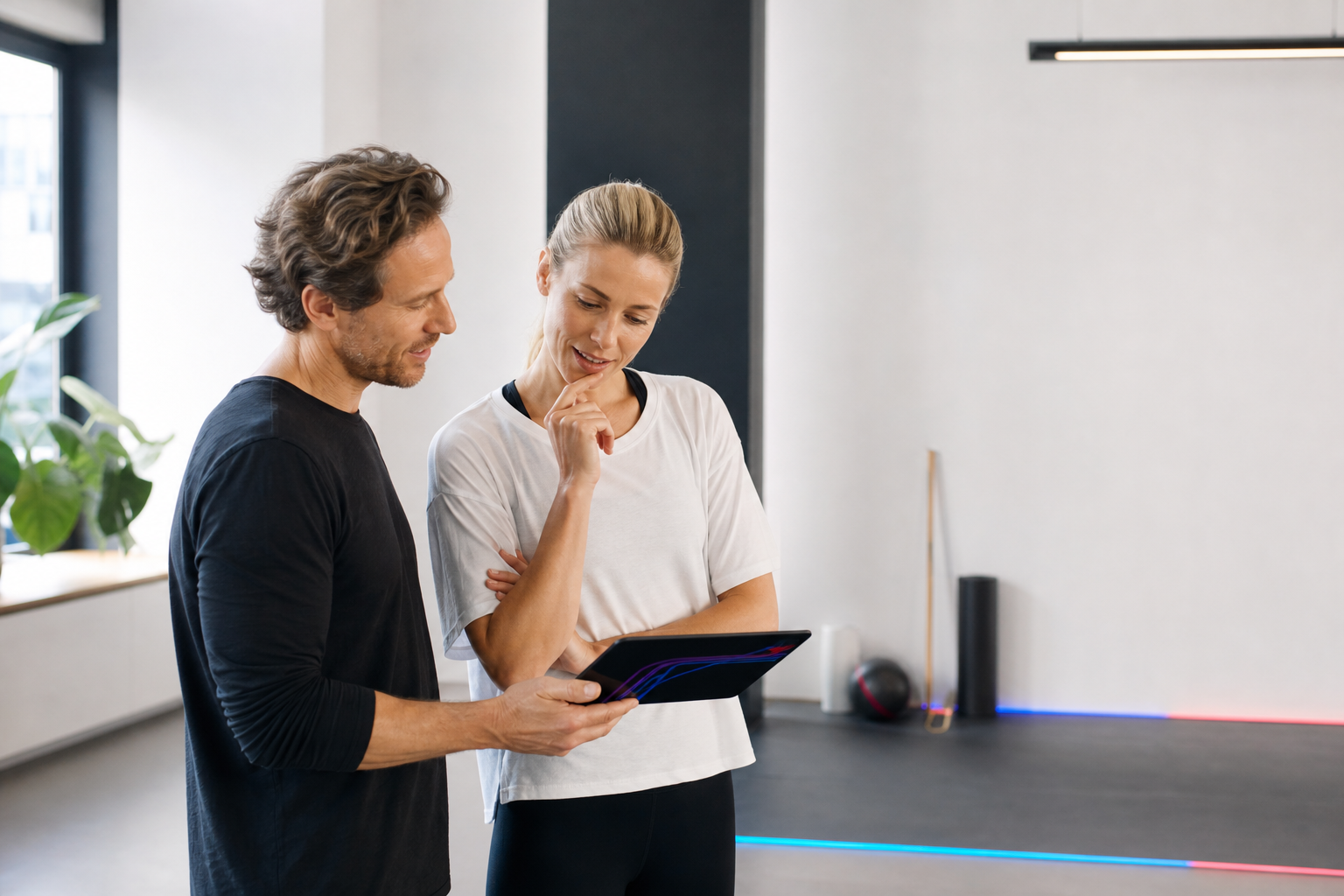
“Moovment has made my job easier and more enjoyable and gives me and my clients an honest view of the results achieved.”
Carlos Banda, Physical Therapist, Sweden Get In Touch
If you're interested in continuing your journey working with us, complete the form with a few details about your wishes and next steps.
We review every message before getting back to you.
Thankyou for your attention and interest in human movement!